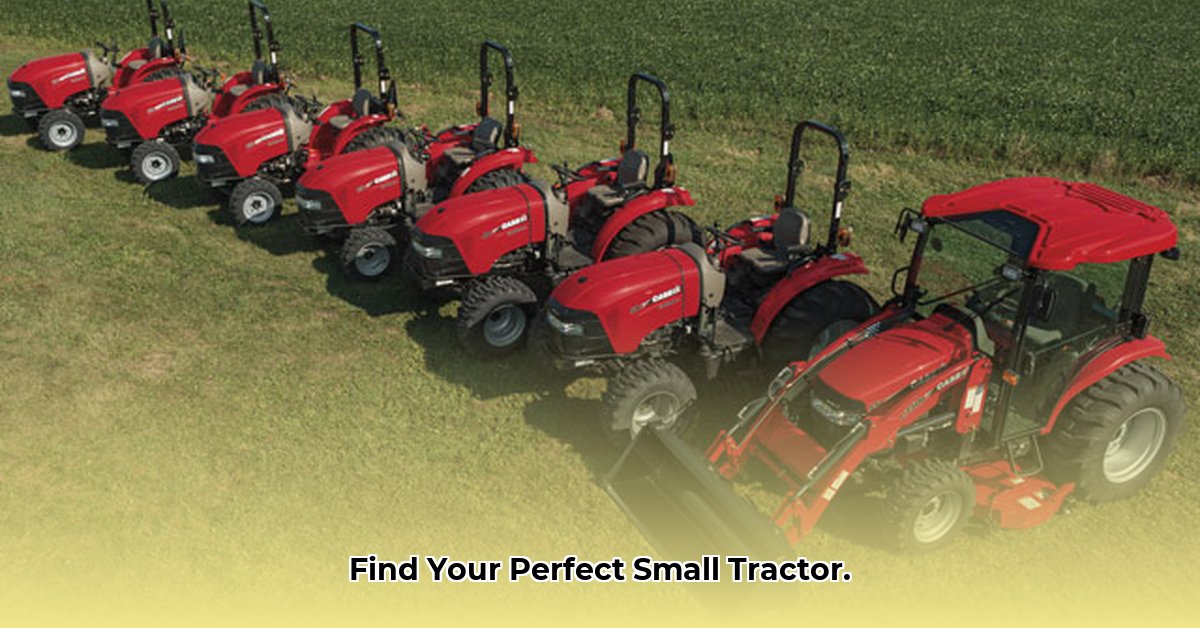
Choosing the right small tractor is a significant investment. This comparison guide focuses on two Case IH series: the Farmall C series and the sub-compact series, highlighting their key differences to help you make an informed decision. We'll analyze horsepower, maneuverability, features, and maintenance to help you determine which tractor best fits your needs and budget. For more details on Case IH small tractors, check out this helpful resource.
Case Small Tractor Series Comparison: Farmall C vs. Sub-Compact
This comparative analysis focuses on the strengths and weaknesses of the Case IH Farmall C series and sub-compact tractors to assist in your purchasing decision. Both series offer distinct advantages depending on your specific needs and the scale of your operations.
Power and Performance: Heavy Lifting vs. Precise Maneuvering
The Farmall C series boasts higher horsepower than the sub-compact series, making it ideal for heavy-duty tasks such as plowing large fields or operating heavy implements. The greater torque provides superior pulling power. Think of it as a workhorse for larger properties and demanding projects. Do you need brute strength to tackle significant workloads?
Conversely, the sub-compact series, while less powerful, excels in maneuverability. Its smaller size and improved turning radius are perfect for navigating tight spaces, making it ideal for smaller properties, landscaping, and tasks requiring precision. Is agility and precise control in confined areas a priority?
Transmission: Control and Ease of Use
The Farmall C series offers a choice of transmissions: 12x12 or 16x16 speed mechanical shuttle transmissions, providing precise control, and a hydrostatic option offering simpler operation. The mechanical options are optimal for experienced operators requiring precise gear selection, while the hydrostatic transmission is user-friendly, especially when using a front loader. Which level of transmission control best suits your experience and operational needs?
The sub-compact series typically features a simpler, more user-friendly transmission, prioritizing ease of operation. This focus on simplicity minimizes complexity and enhances ease of use for a broader range of operators.
Comfort and Convenience: Operator Experience
Both series prioritize operator comfort, albeit differently. The Farmall C series often includes features like an adjustable suspension seat and conveniently placed controls, with higher-end models offering climate-controlled cabs for enhanced comfort and all-weather protection. Is all-day comfort and protection from the elements crucial?
Sub-compact tractors prioritize ease of access and simple operation. They generally feature an open-air platform, eliminating the complexities of a cab while maintaining straightforward controls, emphasizing functionality and affordability. Do you value simple operation over climate control and a fully enclosed cab?
Hydraulics and PTO: Power and Versatility in Action
The Farmall C series features a robust hydraulic system with a higher flow rate, providing ample power for simultaneously operating multiple attachments and lifting heavy implements. The availability of both mid-mount and rear PTOs (power take-offs) further enhances versatility. Is the ability to work with a wide range of demanding implements essential?
The sub-compact series hydraulics and PTO systems are generally scaled to handle the tasks for which they are intended. While less powerful than the Farmall C series, they remain well-suited to the needs of smaller properties and less demanding tasks. Are your needs limited to lighter-duty implements?
Maintenance: Long-Term Ownership Considerations
The Farmall C series often boasts a longer warranty and extended service intervals, such as oil changes at 300 hours, minimizing downtime and reducing long-term maintenance costs. This longer service interval translates to greater operational efficiency and reduced maintenance expenses. Is minimizing downtime and maintenance expenses a primary concern?
While specific maintenance details for the sub-compact series are less widely publicized, Case IH's general reputation for durable equipment signifies reliable, low-maintenance operation. A reputation for reliability and ease of upkeep can be a vital factor in your purchasing considerations.
Comparison Table: Key Differences at a Glance
| Feature | Farmall C Series | Sub-Compact Series |
|---|---|---|
| Engine Power | Higher horsepower | Lower horsepower |
| Torque | Higher torque | Lower torque |
| Transmission | Multiple options (mechanical or hydrostatic) | Simpler, user-friendly transmission |
| Hydraulic Flow | Higher flow rate | Lower flow rate |
| PTO | Mid-mount and rear PTOs | PTO (specifications vary) |
| Operator Comfort | Adjustable seat, cab options available | Open-air platform, simple controls |
| Maintenance | Longer service intervals, longer warranty | Generally low maintenance |
| Best Suited For | Larger properties, demanding tasks | Smaller properties, less demanding tasks |
Choosing Your Ideal Case IH Small Tractor: A Step-by-Step Guide
This section provides a structured approach to selecting the best Case IH small tractor for your needs, considering key factors and offering a clear decision-making process.
Assess Your Needs: Define the primary tasks, land size, and budget constraints. This initial assessment is pivotal in narrowing your choices.
Consider Land Size: Larger properties generally benefit from the power and versatility of the Farmall C series, whereas smaller properties will appreciate the maneuverability of a sub-compact.
Evaluate Budget: Sub-compact tractors generally offer a more affordable entry point.
Prioritize Tasks: Match the tractor’s capabilities to your specific tasks. Heavy-duty operations benefit from the Farmall C’s power, while more precise, smaller-scale tasks are well-suited to sub-compacts.
Analyze Space Requirements: If maneuverability in tight spaces is essential, the sub-compact's agility is paramount.
Review Maintenance Needs: Consider the long-term costs. The Farmall C's extended service intervals might offset its higher initial cost.
Make Your Decision: Based on the preceding evaluation, select the tractor that best aligns with your needs and preferences. This comprehensive analysis allows for an informed decision based on your specific requirements.
Key Considerations:
- Land size directly influences the required power and maneuverability.
- Budget limitations will narrow your options significantly.
- The types of tasks to be performed determine the necessary power and implement capacity.
- Maneuverability in confined spaces should be a primary consideration for smaller properties.
- Long-term maintenance costs should be factored into the overall cost of ownership.
Choosing the right Case IH small tractor requires careful consideration of your individual circumstances. This guide helps you navigate the options to find the perfect machine for your farming or land management needs.